Appreciating Michael J. Fox, the man
After a period of depression and boozing, he straightened out and launched the Michael J. Fox Foundation, the leading funder for research into fighting the disease.

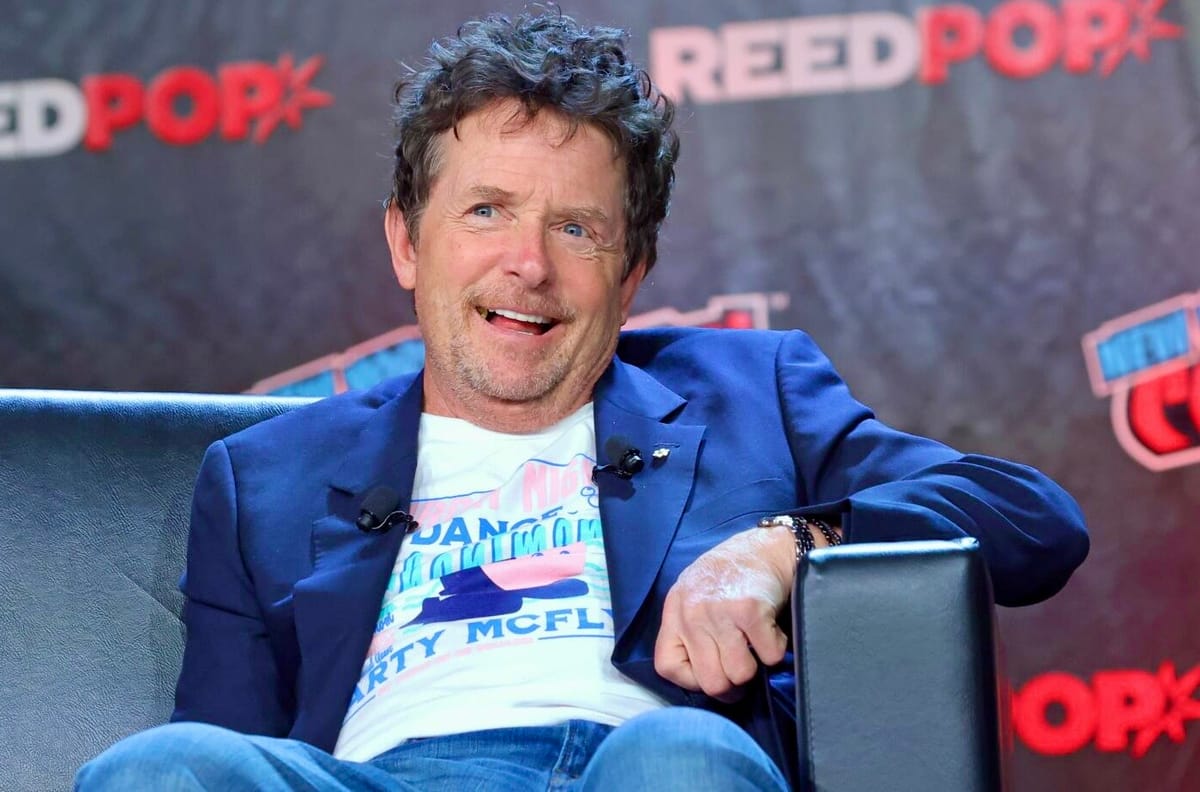
It was June 1982 when, by accident, I met Michael J. Fox, who was destined to become a major star.
It was long before he became one of the world’s leading activists and also long before he became a world-wide icon as Marty McFly in the “Back to the Future” trilogy, and other films.
I was the TV columnist for the Philadelphia Daily News, an assignment that lasted five years and was the busiest, and most enjoyable, of my professional career. That assignment ended in 1985, and I am still in touch with some of my fellow TV journos. Many of them became close friends for reasons I will explain later.
Every June and January the TV networks staged what was called the tour on the West Coast. This was an event during which networks screened their new series or specials to be aired during the upcoming season, they made stars and network executives available for interviews, and hosted visits to the sets of TV series, and even to stars’ homes (which were rare, but memorable).
I had seen the pilot of “Family Ties,” and fell in love with it, as did almost every critic in the U.S. and Canada.
Stars Meredith Baxter Birney and Michael Gross, who played the hippie-like parents, were made available for a gang bang, which is journalists' slang for a mass interview, but I wanted to get some exclusive face time with the stars, which NBC arranged.
That’s what brought me to the studio, scheduled to get a few minutes with the stars after shooting an episode.
As sometimes happens, the shooting ran long, and I cooled my heels in the commissary, which is what studios call their cafeteria.
The wait proved long, and while sipping coffee with me a network rep noticed Fox sitting nearby.
“Would you like to meet him?”
“Why not?,” I said, figuring it would help me pass time.
Fox was 20, but looked 16, and sounded pretty young, too. He had been a child actor, but it didn’t show.
He was very thin, very short, and very friendly, if slightly nervous.
I quickly learned he was Canadian, loved and played hockey, and was down to earth, easy to talk to, and humble.
I wrote a short profile of him, but Google couldn’t find it for me, and I don’t have access to the Daily News archives, which are now owned by the Philadelphia Inquirer. All Daily News work has been reflagged as Inquirer work, which is borderline plagiarism as far as I am concerned.
Anyway, at the time, that was Fox’s first major print interview.
Interestingly, I have no recollection of my interview with Birney and Gross.
Well, it was more than 40 years ago.
Nine years later, Fox was stricken by Parkinson’s disease, which he kept hidden for years, fearful that knowledge of the disease might make him uncastable.
After a period of depression and boozing, he straightened out and launched the Michael J. Fox Foundation, the leading funder for research into fighting the disease.
Let me also acknowledge his one and only wife, actress Tracy Pollan, with whom he has four children.
After fate dealt him a great hand — fame and fortune — it then dealt him an incurable disease. Watching his uncontrollable twitching during public appearances was very painful to me, until I thought about how he was handling it. That is illustrated in the title of his autobiography: “Lucky Me.”
From that initial encounter over coffee, through all the following decades, I have been a fan of Fox, the man.
As a post script, I became friendly with the show’s creator, Gary David Goldberg, in part because we both came out of the Bensonhurst neighborhood of Brooklyn.
Like Fox, he was humble and based “Family Ties” on his own experience, with him being a former hippie, living in an America that had turned to the embrace of conservative Ronald Reagan.
During one of our conservations, I mentioned that my father, who was still living in Bensonhurst, was spearheading a fundraising campaign to revive the once-rich Yiddish theater in New York.
“Let me write a check,” he said.
For one of the few times in my life I was speechless.
“You don’t have to do that,” I said.
“I know that. Who do I make it out to?”
Goldberg went on to produce and direct other shows, winning many awards, until his untimely death at 68 in 2013.
As to why I am still in touch with some of my peers.
The L.A. network tour I mentioned ran for up to three weeks, with events scheduled from 8 a.m. until 10 p.m., sometimes, seven days a week.
During the years I was on the tour, the usual hotel was the gracefully curved Century Plaza in Century City, on the doorstep of Beverly Hills. My first tour in 1980 ran 23 days, and we joked we were being held hostage, like the Americans in the U.S. embassy in Tehran, which had been taken over by Islamists.
When you spend 24/7 with people, who are both friends and competitors, deep bonds are fashioned, similar to teammates on sports teams.
Except we never showered together.