Battling from a Bronx basement to the top
Right from the jump, she had brains and ambition, and was drawn toward journalism, the first rung of a career that would take unexpected turns — and some turns that were carefully plotted.

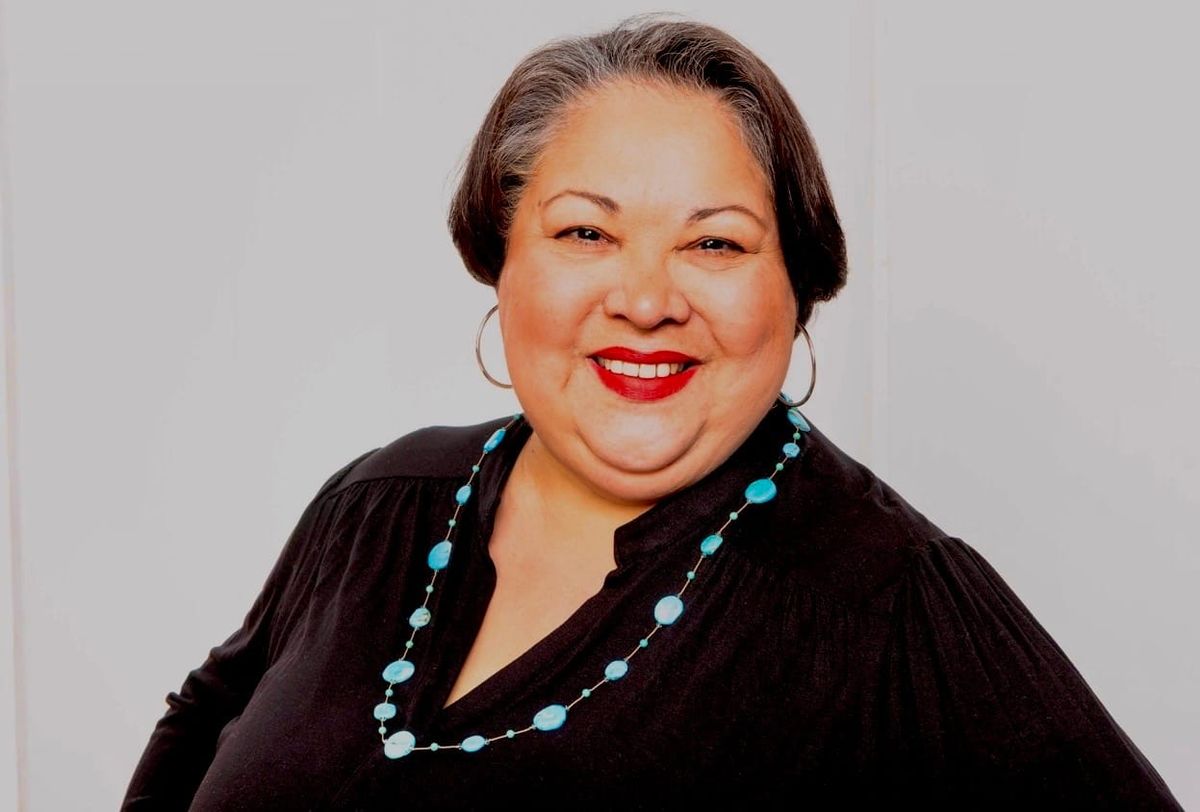
I can’t resist a good Horatio Alger story.
For younger readers, that means “rags to riches.”
Why do I like them so much?
Because they validate the myth of the American Dream, and it is also my own story, although I was never in “rags” and I have not achieved “riches,” although I am comfortable in my declining sunset years.
Many such stories pass my desk, via email, but I stopped at the pitch for a memoir by Rossana Rosado.
What caught my eye?
Like me, she spent time as a journalist, and was also a product of The Bronx, as am I. But like Madonna, she kept re-inventing herself.
The book is “Bronx Attitude” and it is available through this website https://www.bronxattitude.com for $24.95 for the paperback, $34.95 for the hard cover, each signed by the author.
We are both from The Bronx, but Rosado lived in the northern Bronx, in a large private home filled with relatives, with her mother, father, and sister in the basement apartment. Meanwhile, I (a generation before her) lived in a 1-bedroom, ground floor tenement apartment — two adults, two children — in the declining South Bronx. Our lives improved when we escaped the growing violence for a Brooklyn housing project.
What is “Bronx attitude”? I asked her in a phone interview.
“It’s an attitude that says, you know, I’m here, deal with it,” she says. [Fun Fact: The Bronx is the only one of New York’s five boroughs that is connected to the mainland of the United States. All the rest are islands.]
Her advice to others? “Go for it. We sometimes eliminate ourselves because we think we’re not worthy.”
Her Puerto Rican grandfather owned property and bodegas, while my parents owned nothing and worked for wages. Rosado might not think of it this way, but she was raised by capitalists, while I was raised by socialists.
Her 300-page book, that had been stuck in her craw for decades, she says, was written for family, “so they would know the stories of our people.” Much of it is family history, with an overlay of drama.
But it lands with meaning for many beyond familia. It is the story of the post-immigrant experience (although Puerto Ricans are not immigrants, as they are American citizens who just changed their home address).
The book is amazingly candid, right down to the embarrassing admission that she had an abortion as a 15-year-old, and the surgery was demanded by her mother.
She hesitated about telling the traumatic story, but decided to do it on the altar of authenticity.
She has no regrets. The experience was tragic, but also “formed who I am,” a person who would make her parents proud.
The abortion was the worst moment in an otherwise happy childhood, in which she was called “nosey Rosie” because of her default curiosity, a necessary tool for journalists. She was a chronic spy and eavesdropped, also blessed by her gifts of intelligence and ambition.
Other gifts were caring, encouraging parents, with an overbearing mom who forced her to focus on education and achievement, and not being dependent on men.
Rosado achieved that, although it was not easy, as she quickly learned at her first job as a reporter at El Diario-La Prensa, New York’s Spanish-language newspaper.
Unlike previous generations, her English was better than her Spanish and she had to work to get her written Spanish up to speed. So even while she pines for her island of memory, Puerto Rico, the island she finds most comfortable is Manhattan.
At El Diario, she had her first workplace experience with sexism and machismo in the male-dominated newsroom.
When a colleague put his hand on her behind, she didn’t go to HR, she simply went off and slapped the man across the face in full view of everyone.
“It was the way of the day,” she explains. She knew she was in “their world” and didn’t “want to make a drama out of it.”
With the limits set, “they taught me so much about covering this community, and that was my deal. I’m not saying that’s the way it should be, but that was the ‘80s.”
Right from the jump, she was drawn toward journalism, the first rung of a career that would take unexpected turns — and some turns that were carefully plotted.
She left El Diario for TV, where she won a prestigious Peabody award, then worked for Mayor David Dinkins and — 11 years after leaving the newspaper as a reporter — she returned as its first female editor-in-chief, and later publisher. Pretty astonishing.
In that role she moved through the upper tier of New York media, and leadership. It was somewhere in there she formed a tight friendship with Bronx chica Sonia Sotomayor, later to become a U.S. Supreme Court Associate Justice.
Did Rosado’s family find the reality of the American Dream?
“Yes.”
Some say it no longer exists. Do you agree?
“No.”
“This is a country that reflects, that represents, a reality or a possibility,” she says. Very much different than other countries where someone is born into a social class, or an economic class that’s hard to transcend, says Rosado.
“This is why people come here.”
Rosado managed to transcend journalism when her newspaper changed hands several times and she grew weary of fighting with owners in a period when newspapers everywhere were skiing downhill toward economic disaster.
She jumped from that sinking ship in 2013 and from 2014-2016 she was a distinguished lecturer at John Jay College (where she taught in prisons), followed by five years as the New York Secretary of State under Gov. Andrew Cuomo. While in that capacity, she earned a master’s degree in criminal justice from John Jay, where she previously was a lecturer.
That degree opened the door to her current job — commissioner of the New York State Division of Criminal Justice Services.
Which is a long way from a basement apartment in The Bronx, no matter how you slice it.