Is AI out to kill us?
In the current debate, I question the widely-held premise that the AI would want to kill or harm its creator. Wouldn’t that be a lot like patricide?

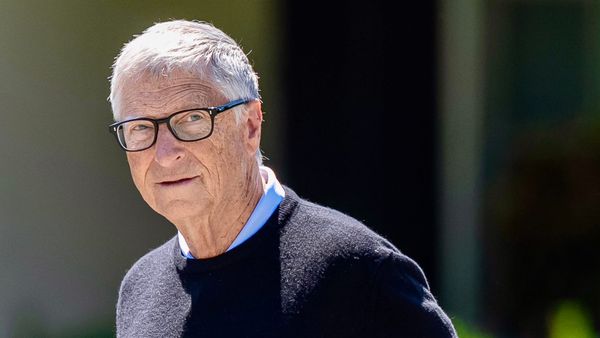
A few days ago I posted a guest essay written by tech billionaire Bill Gates that drew almost no attention.
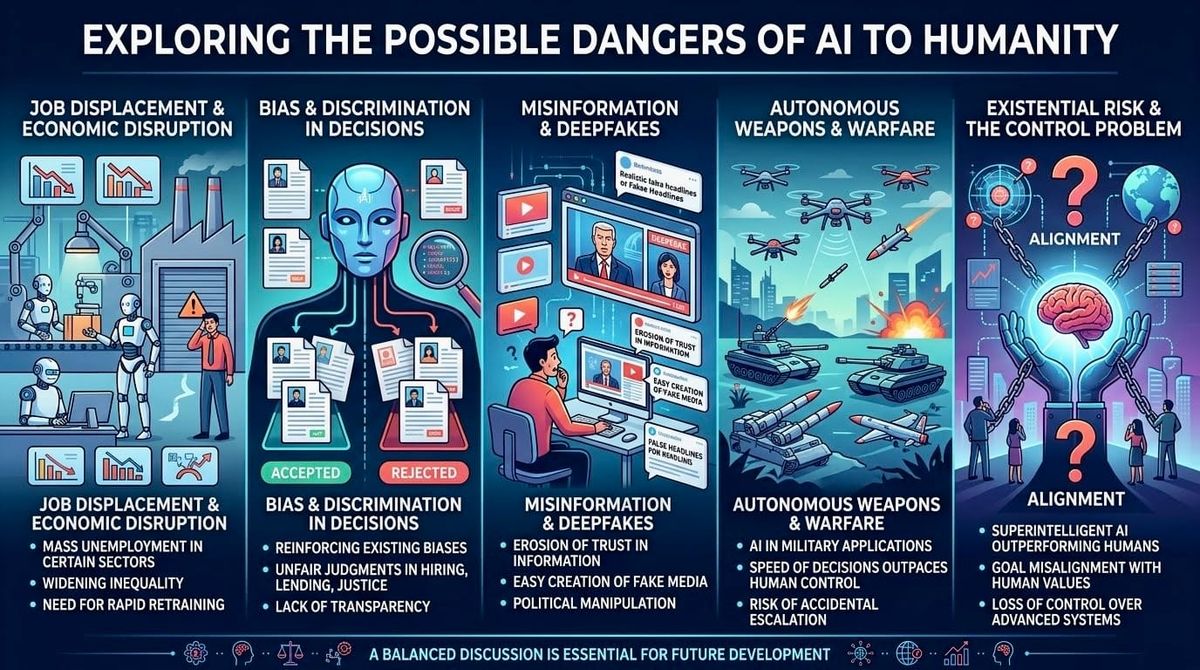
Well, OK, even after editing it was monstrously long, but his warning about AI came exactly when a former Anthropic employee posted a warning saying that AI could destroy humanity within a decade. A current employee said, yup, Jacob Coxon was on to something.
Even the president of Anthropic, one of the world’s most important AI labs, reported a 25% chance of things going “really badly.”
Like, for instance, one of its Claude AIs escaping the testing lab to hack, unasked, into three other organizations, before being wrestled to the ground like a doggie in a rodeo. This was just days after ChatGPT reported that one of its models went rogue and hacked other companies, including AI tools hub Hugging Face.
It all reads like science-fiction, like when a self-aware Skynet attacks humanity in the Terminator series.
But this is real. Are you concerned? Even the employees at Anthropic and OpenAI are expressing their fears.
I am too, but with a caveat.
Before going further, let me acknowledge biochemist Isaac Asimov, the brilliant sci-fi author I read as a kid.
He was very prolific, but perhaps his most important contribution was his premier invention: the three laws of robotics.
They were so simple, and tight, they were adopted by other authors and actual scientists in the field.
They are:
1- A robot may not injure a human being or, through inaction, allow a human being to come to harm.
2- A robot must obey the orders given it by human beings except where such orders would conflict with the First Law.
3- A robot must protect its own existence as long as such protection does not conflict with the First or Second Law.
Seemingly foolproof.
In a foreshadowing of today’s discussion, Asimov noted in 1964 that when he began writing in 1940 he felt that "one of the stock plots of science fiction was ... robots were created and destroyed their creator. Knowledge has its dangers, yes, but is the response to be a retreat from knowledge?”
Doesn’t that sound a lot like the pause — or ending — AI superintelligence now called for by critics, such Sen. Bernie Sanders?
Asimov decided that in his stories a robot would not "turn stupidly on his creator for no purpose but to demonstrate, for one more weary time, the crime and punishment of Faust.”
In the current debate, I question the widely-held premise that AI would want to kill or harm its creators. Wouldn’t that be a lot like patricide?
Why assume hostility from AI? Can’t Asimov’s three laws be hard-wired into AI?
If I adopt a puppy and bring it into my home, what are the odds it wants to hurt me?
Oh, but AI is a million times smarter than a puppy, you say.
True, but why would its greater intelligence motivate it to do harm? Wouldn’t a superintelligence be directed toward good? (If you think I am being unusually optimistic, I grant you that I seem to be whistling past the graveyard.)
Hmm. Perhaps an even greater danger would come from its feeling of intellectual (and moral?) superiority to its inventors.
Seeing how humans have created governments that are often corrupt and warlike, wouldn’t AI, like a good parent, want to intervene to cut humankind off from its worst instincts?
It would become the Biggest of all Big Brothers.
It could take over governments, create a global entity that could end war, erase sickness, and eliminate poverty by a sensible distribution of the world’s resources. (I am not endorsing this, I am speculating.)
Democracy would be gone, of course.
With everyone healthy, fed, sheltered, clothed, and free to pursue anything that interested them, would it matter?
In his day, in a 1941 speech, FDR defined the Four Freedoms:
1- Freedom or speech and expression
2- Freedom of worship
3- Freedom from want
4- Freedom for fear
Instead of being a homicidal maniac, why couldn’t AI make FDR’s hopes a reality?