Saying farewell to a well-known Rizzocrat
Marty’s role was legal, but his influence extended beyond the formal duties of his office through his relationship with the mayor and his participation in the political world surrounding City Hall.

I’ve just learned of the death of Marty Weinberg, 88, one of the Rizzocrats who made politics and life in Philadelphia more interesting in the ‘70s and ‘80s.
A very talented lawyer, he may be best remembered as City Solicitor under Mayor Frank Rizzo, from 1971-74, and later headed the Philadelphia Democratic Party, elected in 1976. He is less remembered as a candidate for mayor in 1999, and I have a brief story to tell about that, in a minute.
He was known to everyone as Marty, and built a career that spanned the courtroom, City Hall and the campaign trail. He was a bestie with Rizzo, and became a consequential figure in Philadelphia’s political establishment, ultimately making his own bid for the city’s highest office.
Marty was the son of Manny Weinberg, a former Philadelphia City Council member and a grizzled veteran in the city’s ward-based political organization. Family connections gave him an early familiarity with the workings of Philadelphia politics, where neighborhood loyalties, party organizations and personal relationships often played an important role in determining who held power.
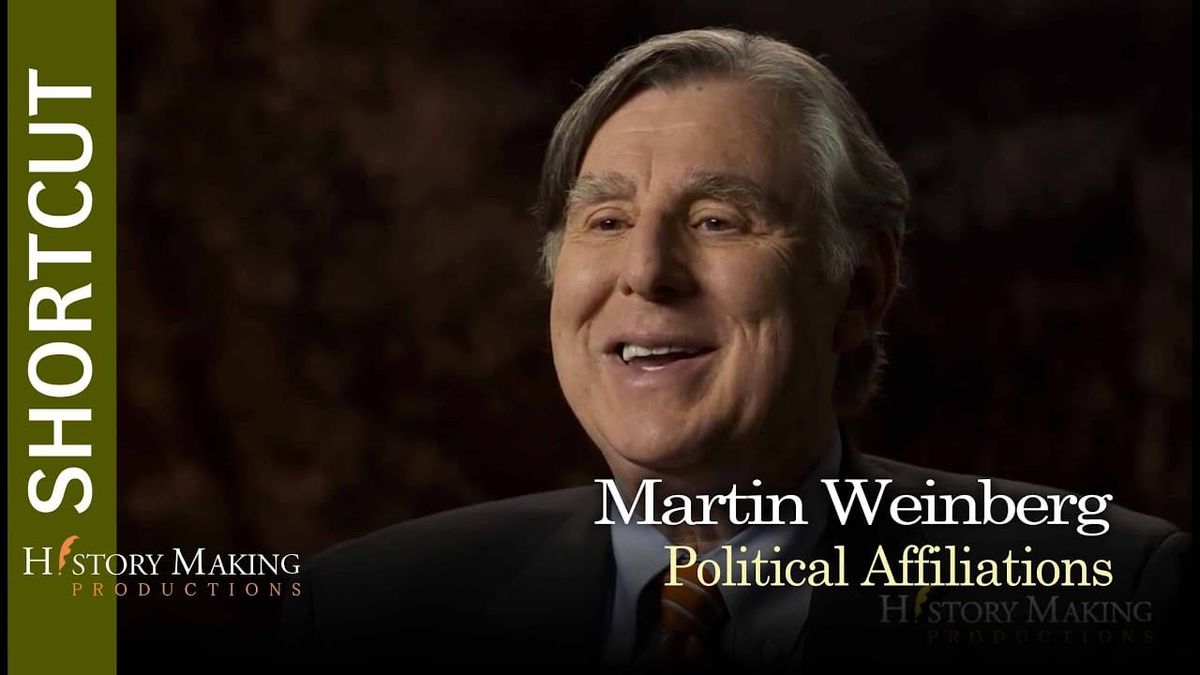
That was intriguing to Marty, but he studied law, and entered public service as an assistant district attorney before becoming a central figure in the political orbit of Rizzo, then a Democrat. In a clip from an historical documentary, Marty explained why he was a Democrat.
He began teaching at Drexel University, but his life and career changed when he joined Rizzo’s campaign for mayor. Following his victory in 1971, Rizzo appointed Marty as city solicitor, the city’s chief legal officer, responsible for representing municipal government and advising it on legal matters.
Marty’s tenure coincided with a turbulent period in Philadelphia government. Rizzo, who had served as police commissioner before becoming mayor, governed with a forceful style and developed a loyal following among many working-class and white ethnic voters.
His administration also drew sustained criticism over policing, race relations and the exercise of municipal power. As city solicitor, Marty occupied a position at the intersection of law and politics during an administration whose decisions frequently generated controversy. Spears thrown at him were deftly avoided by a man known for his even temper.
Marty’s role was legal, but his influence extended beyond the formal duties of his office through his friendship with the mayor and his participation in the political world surrounding City Hall.
After his service in the Rizzo administration, Marty became chairman of the Philadelphia Democratic City Committee, the organization responsible for coordinating party activity across the city’s wards. The position placed him within the network of political leaders, ward officials and elected representatives who shaped Democratic politics in Philadelphia.
Vince Fumo, another member of the Old Guard, told me he never would have become a state senator without Marty’s help.
Marty eventually stepped into electoral politics himself. In 1999, at 62, he entered the Democratic primary for mayor, seeking to succeed Ed Rendell. It was his first campaign for elective office, but his years in politics gave him access to influential supporters and substantial campaign resources.
The campaign was contentious, with Marty challenging former City Council president John Street, state legislator Dwight Evans, former state welfare secretary John White Jr., former City Council member Happy Fernandez, and gadfly Queena Bass.
At the end of the bruising campaign, Marty finished second to Street, receiving approximately 91,500 votes, or 31 percent of the total, to Street’s roughly 107,300 votes, or 36 percent.
On Sunday, when I informed Street of Marty’s death, he said, “Marty was a good man. I liked him and we always got along,” despite Marty’s ferocious attacks on Street during the campaign. That was politics, not personal.
And here’s that anecdote I promised.
Before Marty declared his intention to run, he sought the opinion of friends, and others, including me.
He invited me to join him for lunch, to discuss something “important.”
As a columnist, I could not say “no,” even though I did not know what he wanted to talk about.
And since this was confidential, we would not be going to the Palm or another upscale Center City restaurant where our twosome might set tongues wagging.
So we met in South Philly, where Marty grew up, at the Oregon Diner, at a back booth.
The intrigue was funny.
Marty wanted my advice, but asked it be off the record. No one knew he was about to run.
I agreed, reluctantly. Frankly, I was flattered to be asked for advice from this prominent man. I think he wanted the opinion of someone in the press, most of which was hostile to Rizzo, and by association, to him.
Marty laid out what his platform would be, traditional Democratic principles with this dash — how would it sound if he promised not to take a salary? He was already a millionaire, and would donate the mayor’s salary to the city.
As I remember it, I told him it was a nice gesture, but would not change many votes.
I don’t recall if he used that during the campaign, but he lost to Street by about 15,000 votes. Street went on to squeak by Republican Sam Katz by about 2,000 votes.
Marty was a loyal friend, a trusted public servant, a guy liked by every person — each of whom I know — I have mentioned in this column.