Guest essay: Left & Right combine to gang up on Israel
Tehran built its negotiating timetable around America’s midterms, on the theory that November will do to this President what 1979 did to Carter

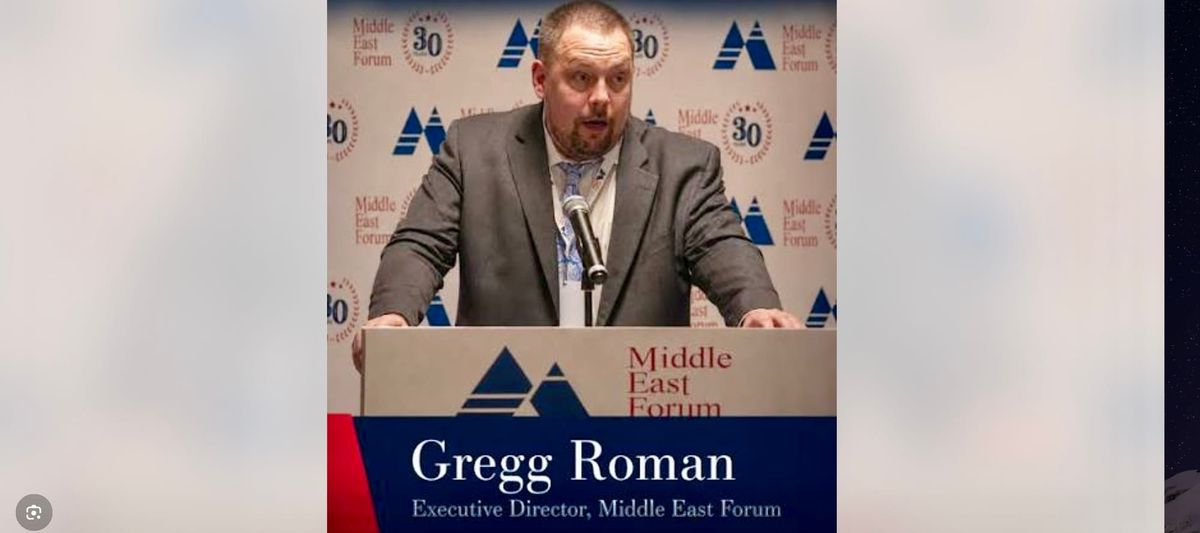
By Gregg Roman
On July 15 the House voted on an amendment to the 2027 State Department appropriations bill that would have eliminated all $3.3 billion in annual military aid to Israel. Thomas Massie, the Kentucky Republican, wrote it and cast the only Republican vote for it; 103 Democrats, just under half the caucus, supplied the rest, with ten voting present (Jewish Insider, AP). The amendment failed, 314 to 104, on Republican votes (Politico). Minority Leader Hakeem Jeffries opposed it while calling for “urgent change” in the relationship; Whip Katherine Clark voted yes. Earlier this year, 40 Senate Democrats voted to block certain weapons sales to Israel (Jewish Insider).
The mechanics are the point: the populist right authored the measure and the progressive left carried it, nearly unanimously among its supporters. The two ends of the spectrum currently agree on one question, whether to arm America’s ally in wartime, and the shared answer is no.
Both flanks are on the record. On the right: Tucker Carlson, whose October interview gave Nicholas Fuentes and his Holocaust-revisionist politics a mostly unchallenged two-hour platform, and Candace Owens, whose conspiracies about “globalist Jews” are published daily (Jerusalem Post). In February, a member of a federal religious-liberty commission wore a Palestinian-flag pin to a hearing on antisemitism and declared she would “never bend the knee to the State of Israel. Ever!” (Jewish Journal).
On the left: Zohran Mamdani, an anti-Zionist Democratic socialist, holds New York City Hall, and Abdul El-Sayed won Michigan’s Democratic Senate nomination last week. El-Sayed told a debate audience that American foreign policy “has been handed to us” by Israel and AIPAC, called Israel a “rogue state,” and attributed the war to “the impact of AIPAC in our politics” (JTA, Jewish Insider).
The two flanks’ descriptions of the war rest on the same three claims: an entangling ally, a manipulated Washington, an establishment lying about the threat. The vocabularies differ. The policy conclusion is identical.
The relevance to a war brief is direct: the American consensus is itself a target. Per the Guardian, Tehran built its negotiating timetable around America’s midterms, on the theory that November will do to this President what 1979 did to Carter (Guardian).
Mohsen Rezaee, the new secretary of the Supreme National Security Council, warned last week that continuation of the blockade means “American vessels and forces will face serious risks and casualties” (CNN). Tehran’s theory of victory is not naval; it is that the American center cracks before the Iranian economy does. Each recasting of the war as an Israeli project, from either end, supports that theory at no cost to Tehran.
The precedent is on file: in the 12-day war of June 2025, the two ends opposed American involvement loudest and simultaneously, and both compared the Iran intelligence to Iraq in 2003 (Jewish Insider). The fringes do not need to win the argument. Sustained erosion of the center is sufficient.
This report originally appeared in the Middle East Insider