How to beat the meat conundrum
I understand the creepy feeling that arises when we discuss cultivated meat, which is made from actual animal cells. That’s when you hear terms like “Frankenfood,” a monster made in a laboratory.

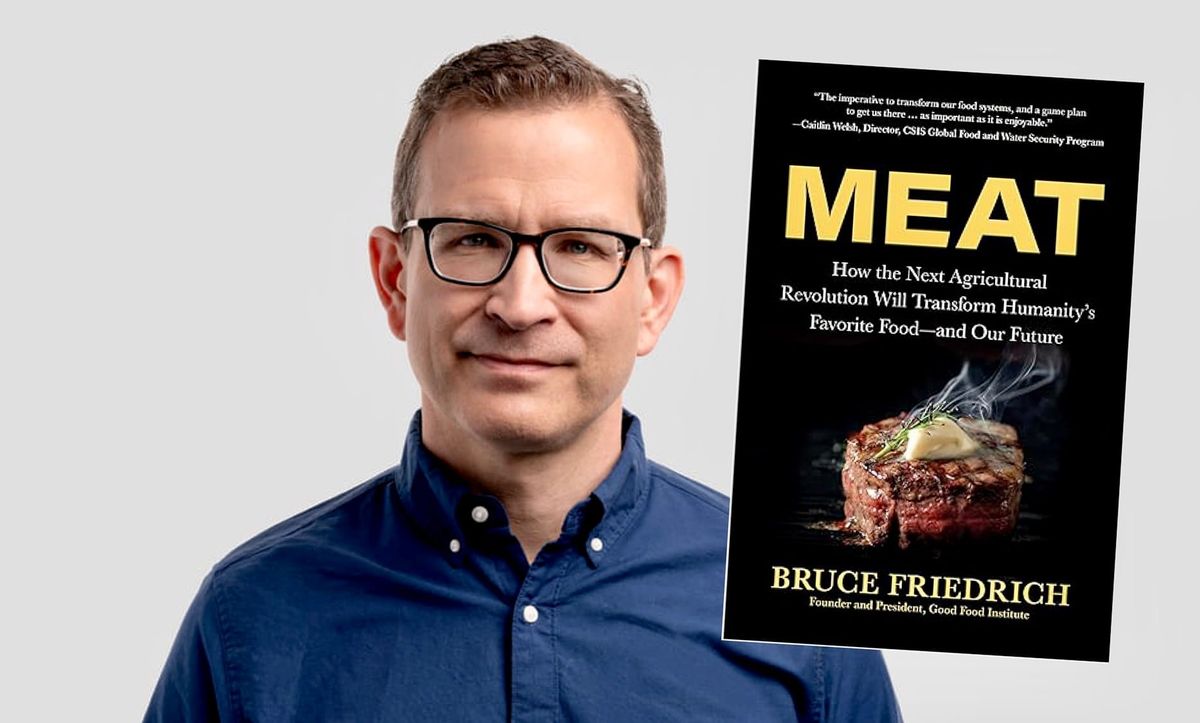
Right off the bat, in his 307-page book titled “Meat,” author Bruce Friedrich concedes that animal protein is “humanity’s favorite food,” and he renounces any legislation to wean you off it. He is a realist (who grew up on fast food).
The founder and president of the Good Food Institute, Friedrich says attempts to get Americans to eat less meat have largely failed, and he doesn’t want to tell you what to eat.
Moral persuasion and guilt don’t work. He does want to convince you that current agricultural practices are bad, and science is developing plant-based protein that mimics animal protein. Add to that cultivated meat, grown from actual animal cells, that tastes as good as meat, and costs far less. It beats raising mammals for food.
Rather than demanding that humanity stop loving meat, Friedrich advocates changing how meat is produced.
As someone who has long been devoted to animal causes, and fighting the cruelty that is a permanent feature of our food chain, I am open to his arguments.
Who is not? People I have encountered over the years who think they are super clever when they say, l love animals, right there on my plate. They are not going to buy the $29.95 book.
Friedrich himself says that if you are reading the book, “you care about food systems. And if you care about food systems, I’m guessing you care about food loss and waste.”
It is the other people — the people who won't read the book — I hope to reach with this column. I want to give them — you? — a moment to reflect on the reality of the present, and the possibilities of the future.
[Personal disclosure: I stopped eating veal 50 years ago because of its monstrous cruelty to veal calves. Also foie gras. I haven’t eaten pork products in decades because of factory farming. This year I stopped eating all mammals. I support a number of nonprofits that fight animal cruelty, and factory farming.]
Friedrich believes we are on the cusp of amazing advances in food production, of allowing flesh fans to have their cake (meat) and eat it, too — without causing animals to suffer in pain, such as in factory farming; and without the destruction of our ecosystem that results from mass agriculture.
It’s what he calls the next agricultural revolution.
In one sense, "revolution" may be too strong a word, one that causes fear.
“We already add iron, zinc, and folic acid to flour and Vitamin A to oils and sugar. Why not extend this to alternative proteins, fortifying with key nutrients of concern such as iron, zinc, and Vitamin B-12?,” he asks.
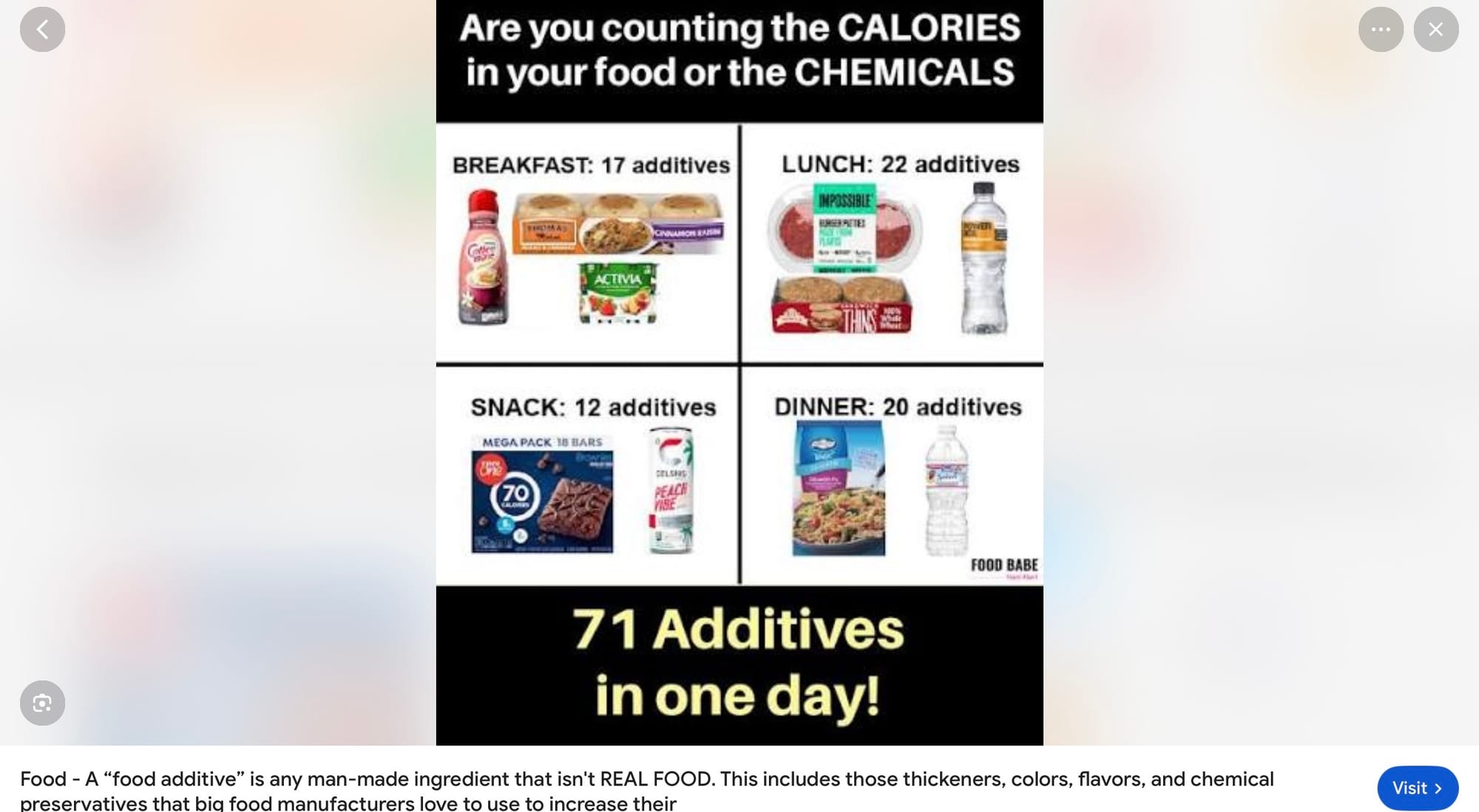
Not to press the point too hard, but if you are scared of adding good things to your diet, why aren’t you apoplectic about the long list of weird science chemicals you find in almost all processed foods?
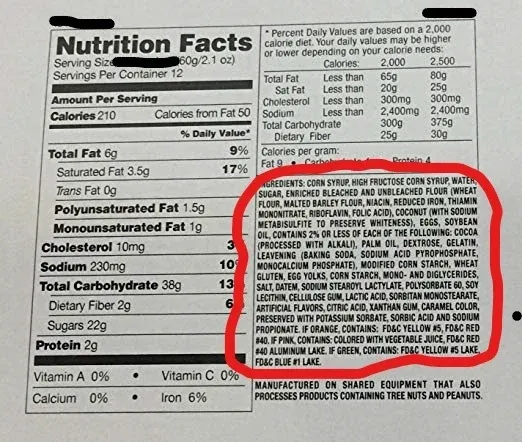
Try reading the ingredients list of many processed foods. You’ll need a degree in chemistry.
And I understand the creepy feeling that arises when we discuss cultivated meat, which is made from actual animal cells. That’s when you hear terms like “Frankenfood,” a monster made in a laboratory.
Friedrich tells me, the “Food and Drug Administration allows conventional meat to be contaminated with 100 different veterinary drugs, from Amoxicillin to Ractopamine, as long as they stay under USDA's 'acceptable' limit.
“USDA also lets cattle, pigs, and chickens with tumors, including cancerous ones, go to market, as long as the tumor gets cut out first,” he says, with stomach-turning detail.
There’s none of that with cultivated meat, or plant-based meat.
In its early days, Friedrich concedes the plant substitutes stalled out. They were often cardboardy, but science has surged since then. Supermarkets are giving more shelf space to the alternatives.
In 2019, Burger King rolled out a very successful plant-based Impossible Whopper. Almost daily more restaurants offer vegetarian burgers, along with other nonmeat dishes.
Friedrich hopes that vegetarian expansion will at least slow the growing demand for meat products that, while tasty, bring severe systemic risks, including greenhouse gas emissions, biodiversity loss, antibiotic resistance, and pandemic vulnerabilities.
He quotes United Nations Environmental Program Executive Director Inger Anderson as saying that three-quarters of emerging diseases — such as SARS. Ebola, Zika — started in animals. The more animals we produce, the more risk.
If you are a Boomer, you went through almost your entire life without hearing about plagues. If you are a Millenial, you grew up with swine flu, equine flu, and recurring bouts of avian (bird) flu, as recently as last year, when an avian flu jumped species to infect dairy cows.
Does it make you stop and think?
If not about pandemics, think about efficiency and waste.
Friedrich points out that it takes roughly nine calories of grain fed to a chicken to produce just one calorie of meat—a 89% loss in caloric efficiency. For beef, the ratio is even more extreme.
He argues traditional agriculture is an outdated, resource-intensive technology that can be rendered obsolete by cleaner, more efficient methods.
Such as?
A two-pronged solution:
Plant-Based Meat: Engineering plant protein to replicate the texture, flavor, and cooking experience of conventional meat.
And
Cultivated (Cellular) Meat: Growing real animal meat directly from cells without the need to raise and slaughter animals.
Many of you currently enjoy such “fake foods” as plant-based eggs, nondairy milk, imitation crab, vegan butter and ice cream. You can read about it here, along with some fakes you should avoid.
So the closing question is this: If there were a delicious, healthy, low-cost, environmentally and animal friendly alternative to meat, why wouldn’t you eat it?