The case for second chances for criminal offenders
I am all for punishment, but a conviction for, say, burglary, should not be a life sentence.

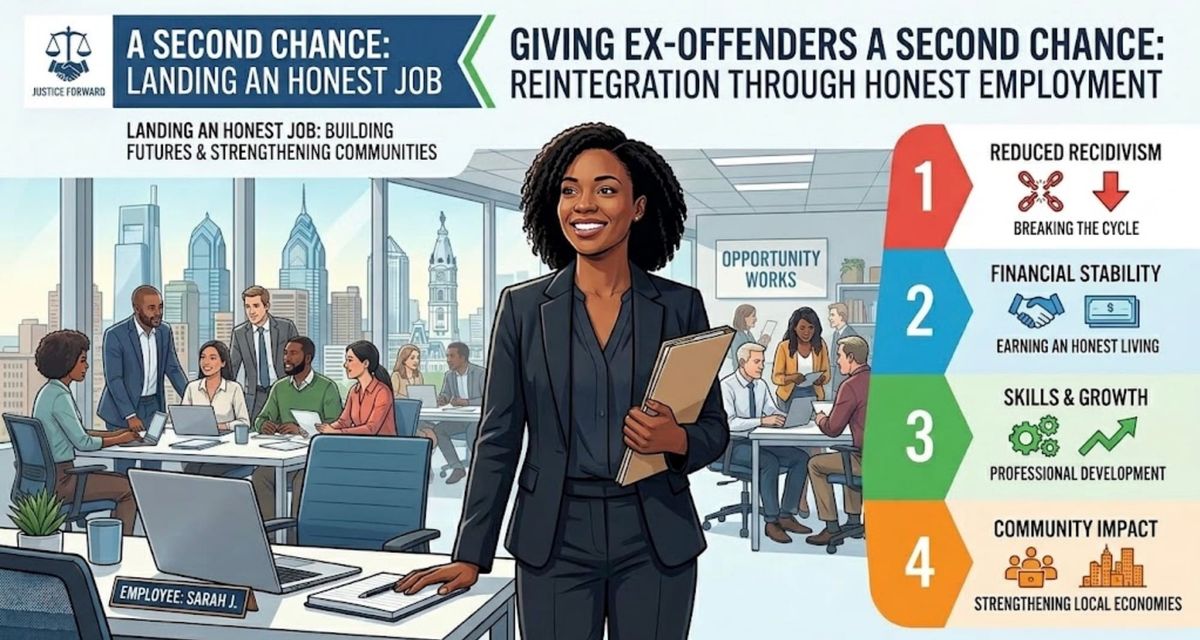
You may be wondering how a man with a gun-charge conviction and a homicide accusation wound up being a Philadelphia city employee.
Many are wondering.
Philadelphia Water Department employee Eric Lewis now is in jail, accused of the ambush murder of Philadelphia Police Department Shane Seiber. He was acquitted of a 2019 murder, and in 2015 was convicted on misdemeanor charges of simple assault and carrying a firearm in public.
Neither charge disqualified him from city employment, and rightfully so.
If you’ve been reading me for a while, you might be surprised because I a “law and order” guy whose north star is Obey The Law.
Do that and trouble won’t find its way to your door.
The city is doing that, as distasteful as it might appear on first blush.
Lewis was acquitted on the murder charge, which means he was not guilty, despite the fact that District Attorney Larry Krasner later claimed that police botched the prosecution.
That might be true, although I seldom take the progressive Krasner’s word for anything. In any event, the murder should not be held against Lewis, like it or not.
The gun charge, for which he served probation, fell outside the seven-year window in which it could be considered in an employment decision.
In 2011, the city passed a “ban the box” law, banning employers from asking questions about criminal background on job applications. In 2016, the city enhanced the law and prohibited employers from asking about criminal background until a provisional offer of employment was made. The seven-year rule was included in the law.
At the time, I approved of the new law, and I still do.
Why?
I wrote several columns based on the philosophy of a second chance, and also having “paid the debt to society” by having been punished.
I am all for punishment, but a conviction for, say, burglary, should not be a life sentence.
That’s how it was described to me by ex-con Joe Bell, in an Aug. 20, 2012 column.
When he was young and dumb he made mistakes, and more than once. “From the first choice to every choice I’ve made up until today, I’ve made them knowingly. My mother taught me right from wrong. It wasn’t peer pressure, it was not circumstances. It was all me,” he told me.
But his record made it almost impossible to get a job — the life sentence. It was like a religious excommunication, he said.
In that column, I wrote there were two reasons we, as a society, should help ex-offenders.
“The first is altruistic: I you believe in redemption, isn’t Joe Bell as worthy as Michael Vick,” the dog-torturing ex-con hired to be the Eagles quarterback.
“The second is from a practical viewpoint: If ex-offenders are denied honest jobs, what is left for them but to steal? Letting them break into a paying job is better than forcing them to break into your house.”
That’s how I felt then, and now.
How do you feel?