The big issues candidates don’t talk about
Has anyone been making an issue out of our ginormous national debt, $40 trillion?

I did a column a few days back on the overwhelming agreement a large majority of Americans have on a large array of topics, everything from abortions to voter ID.
This is a sort-of followup, asking why some topics — that most Americans believe are important — are rarely, if ever, discussed.
As the campaigns head toward our Nov. 3 election day (which is not to deny early voting, mail-in voting, etc.) one mega theme is affordability, usually sung by Democrats. Another is public safety/defense, usually from Republicans.
Most Americans want expanded and lower-cost healthcare, if not necessarily Medicare for All, which is an idea that is growing in popularity. Republicans contend that would lead to enormous waits for care, as you find in the U.K. (As if there were not long waits for nonemergency care, here.) While everyone is covered by the National Health Service, Britons are free to purchase private health insurance, if they choose.
I hear many candidates talk about the above. I have to strain to hear anything about the following, such as demands from Left and Right to release the rest of the Epstein files, immediately. Let the chips fall where they may (after necessary edits to protect the identity of the innocent). In this case and others, I am not saying no candidate has ever mentioned them. I am saying they are not major themes that get reported.
How is it possible that the major issue of Social Security hitting the red ink in a few years is not a major topic of discussion, when rescuing the fund for decades is as simple as removing the cap on taxable wages? Why the silence? I think I know. Keep reading.
Has anyone been making an issue out of our ginormous national debt, $40 trillion?
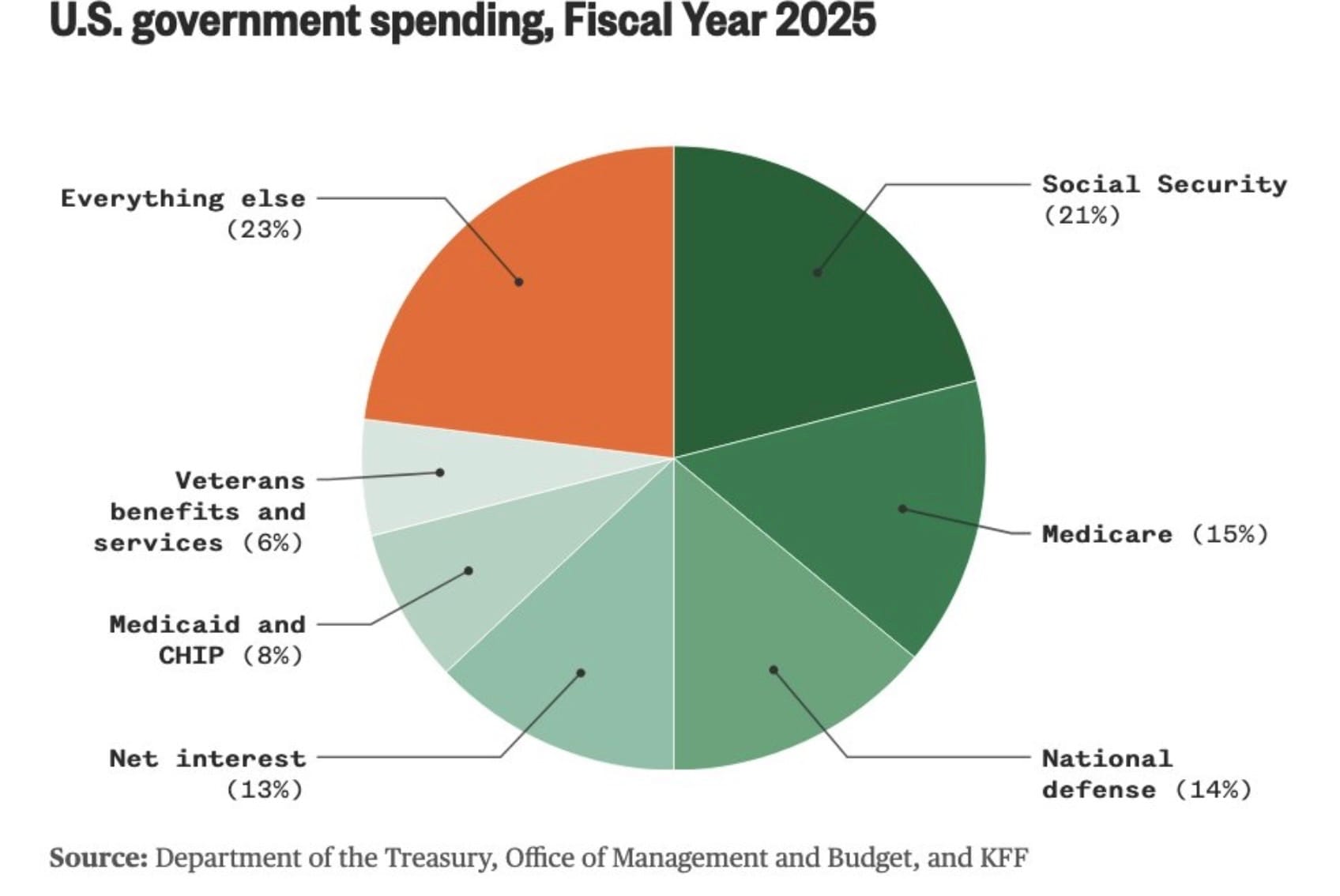
About 13% of every dollar collected in federal revenue is spent on paying interest on that debt. That is almost what we spend on national defense, following Social Security, and Health/Medicare. The debt exceeds our GDP — gross domestic product.
It is a Category 5 hurricane bearing down on us and (virtually) no candidate is sounding the alarm. How is that possible? Are we that disconnected? That dumb? That unwilling to reduce spending or increase revenue?
Did someone say increase revenue? What does that mean?
It means increase taxes.
On whom?
Those who best afford it. Yes, the rich.
I don’t like putting my hand into someone else’s pocket, but we are in deep doo-doo and the 37% top rate is fairly low for tippy-top income earners. Raise it to what? That’s for Congress to decide, but I’d be OK with 45%.
Most Americans feel the government spends too much.
What does that mean? Spend less.
Uh-oh.
As noted, our third biggest expense is interest on debt, and I have recommended higher taxes as part of the remedy.
The other part is to cut elsewhere, the two biggest being Social Security and Medicare.
They are a political third rail that can’t be touched.
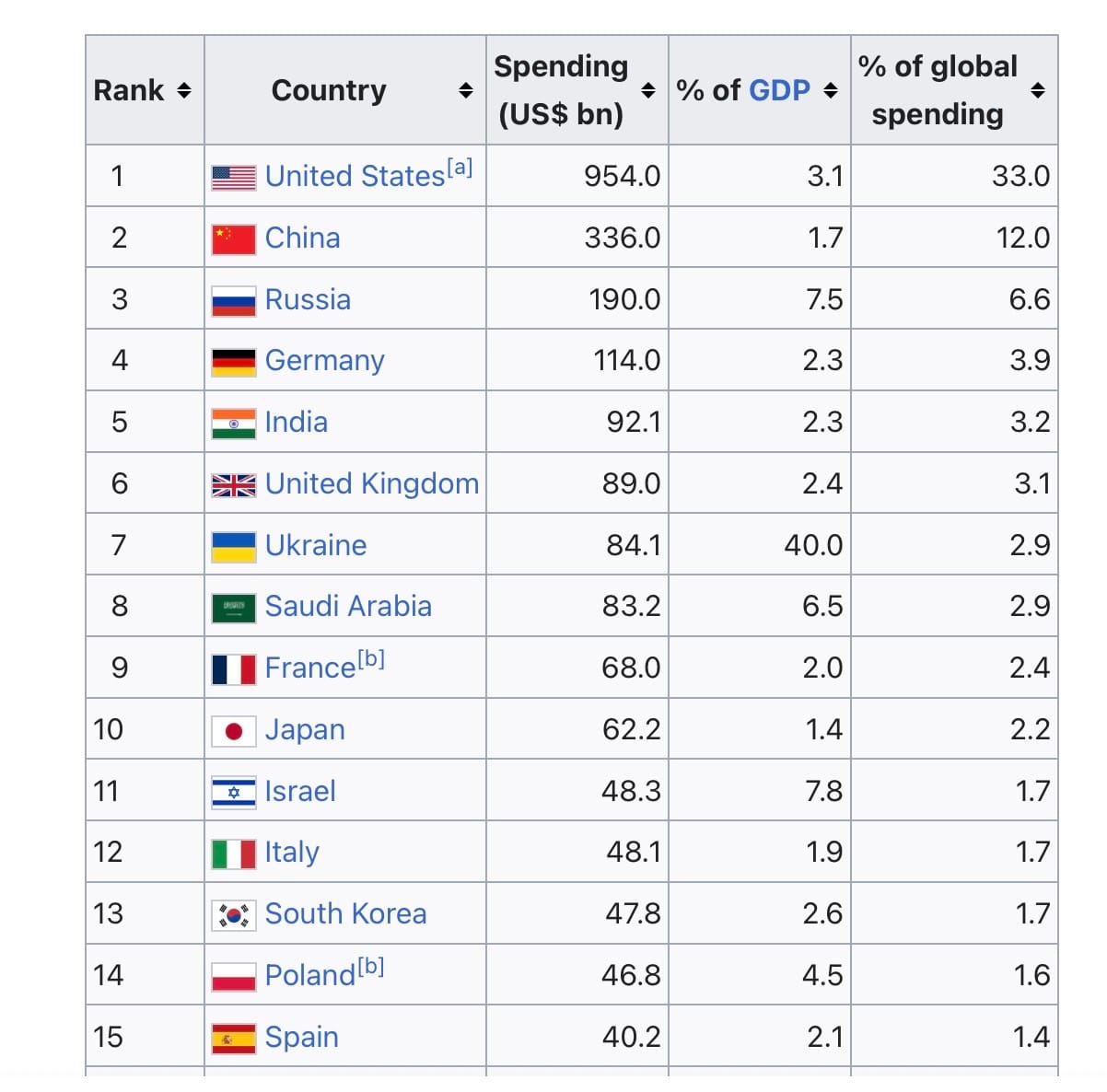
Defense is not. The U.S. spends more on defense than the next five nations — China, Russia, Germany, India, the United Kingdom — combined, so don’t tell me we can’t lop off, say, 15%. That much can be found in waste and duplication. Remember the $600 toilet seats and $400 hammers?
In some districts Israel has been a talking point, portrayed as a villain. Anyone wanting to ban the sale of even defensive weapons to Israel must be asked their position on North Korea, China, Iran, Russia, and Islamic terrorists, such as Hamas.
I have heard squawks about data bases, which high tech needs, but neighborhoods don’t.
The data bases take a lot of space, and a lot of water, and a lot of electricity, all of which seem to be soluble problems.
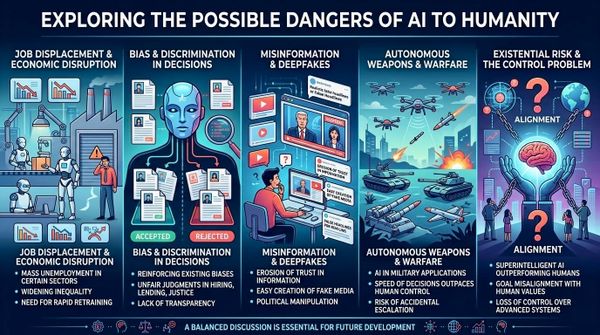
What I am not hearing is harnessing/regulating Artificial Intelligence, which is on the verge of surpassing human intelligence, if it hasn't already.
Just the other day, some AI thingee being tested busted out of its corral, created false identities, sneaked into some other program, and tried to trick human overseers into inserting malware. All without human instruction. All by itself.
Some human engineers admit they have created things they do not fully understand, and fear these cyber players will one day reject the commands of the humans. If this sounds like Skynet, which becomes self aware in the Terminator movie series, and decides to wipe out humanity, that is intentional.
Siegfried and Roy thought they had tamed tigers, yet Roy got badly mauled. In the case of AI, the “tamers” know they don’t have the cyber tiger under control.
What could go wrong?
Do you really want to find out?
And yet no one makes a campaign issue out of it.
Personally, I am against term limits, but a big majority favors it. Every candidate for Congress should pledge a maximum of eight years of service (four terms), while 12 years (two terms) as a max for a U.S. senator.
And every one of them should pledge no stock trading during their term. And no corporate donors. Yes, that money is legal, but distorts the political process.
Everyone should pledge universal background checks before gun purchases, something even a majority of NRA members favor.
Maintaining a sealed border, while offering (with limits) a path to legal status for illegals who have been here more than five years without having committed a crime other than illegal entry and working without authorization, is popular.
All this may not be as simple as it seems because on some issues Americans agree that change is needed, but do not agree on what form that change should take.
A majority may want lower health care costs, but not agree on the solution being a larger government role, more market competition, or some combination of both.
With that said, we won’t get any discussion at all until we demand it from those seeking office. This can be done at candidate forums, letters to the editor, posts on social media. There are lots of ways to get your message out.
If we don’t demand it, we won’t get it.